

Attractions
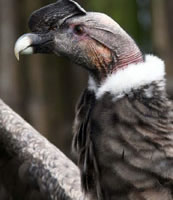
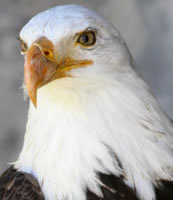
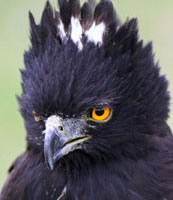
A must-see raptor rescue center located next to Otavalo. The birds here have been rescued in Ecuador from illegal owners by the police. It is illegal to keep wild animals in captivity unless you have a special permit to do so; this law helps combat illegal poaching and the commerce of wild animals.
Don’t miss the falconry show that is performed at 11:30 and 16:30 every day except Mondays when the entire park is closed. www.parquecondor.com
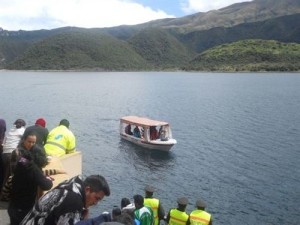
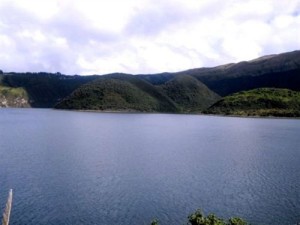
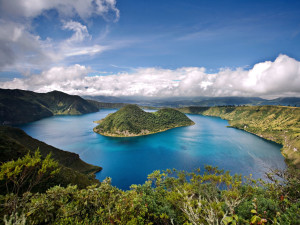
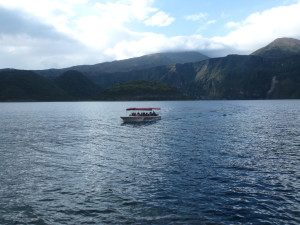
Cuicocha (Kichwa: Kuykucha, “lake of guinea pigs” or Kuychikucha, “rainbow lake”) is a 3 km (2 mi) wide caldera and crater lake at the foot of Cotacachi Volcano in the Cordillera Occidental of the Ecuadorian Andes.
Its name comes from the Kichwa indigenous language and means “Lago del Cuy” or Guinea Pig Laguna in English. It was given this name due to the guinea pig shape of the largest Island in the middle of the laguna. These animals play a significant part in the everyday life of Ecuadorians, as they reproduce rapidly and need a minimum of food and care to survive. They make for a high protein meal especially for populations living in high altitude.
The caldera was created by a massive phreatic eruption about 3100 years ago that generated about 5 cubic kilometres (6.54 billion cubic yards) of pyroclastic flow and covered the surrounding area in volcanic ash up to 20 cm (8 inches) deep. The volcano has been dormant since that time. In combination with other eruptions from nearby Imbabura, Mojanda, Cotacachi, and Cayambe, Cuicocha is responsible for the fertile soil of the Otavalo Valley.
The Cuicocha Lake, a crater lake within the Cuicocha caldera contains four dacitic lava domes which form two steep forested islands: Yerovi, the smaller, and Teodoro Wolf, the larger. People are prohibited on both. The rim of the caldera is extremely steep — so steep, in fact, that the accumulation of sediment is insufficient for most hydrophyte vegetation. An older lava dome from the Pleistocene forms part of the eastern rim. The lake, which is 200 m (656 ft) deep at its deepest point, is highly alkaline and contains little life. It has no known outlet.
The intra-caldera islands, on the other hand, support some wildlife, most notably the Silvery Grebe, which lives around the reeds and feeds on small fish, frogs, crayfish, small water snakes, seeds of water plants, and insects. The bird is found in upper temperate and lower páramo zones throughout the Andes, but little is known about the species. In 1974 a census was taken of the population of grebes at Cuicocha and 44 birds were found.
Cuicocha forms the southern end of the Cotacachi-Cayapas Ecological Reserve. During the second day of Inti Raymi (or Sun Festival) every summer solstice, indigenous shaman use Cuicocha as a bath for ritual cleansing and purification.
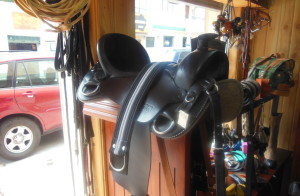
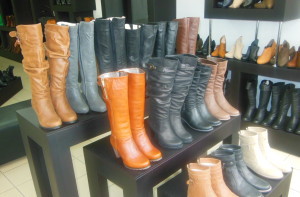

The most walked street of downtown is affectionately called “leather street”. That’s not it’s official name but leather goods is what nearly every store on the street sells. Cotacachi is well known for it’s leather goods. You can find bags of all sizes and colors, boots, shoes, jackets, ponchos, pants, etc, etc. There are a couple of stores that also carry saddles and tack for horses and chaps, whips and spurs for the riders. Many stores have the workshop in the back and you can meet the person who makes the things in the store.
At one end of leather street is the market and the bus depot. At the market you can find fresh fruits, veggies, and flowers every day of the week.
Crater Short Circle
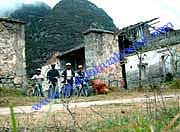
A good ride to experience the beauty and variety of the agricultural side of the crater. Allow 1 hour easy riding.
Crater Complete Circle
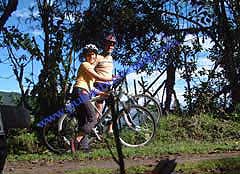
The perfect ride for those looking for adventures. Allow 4 hours difficult riding.
Infiernillo Downhill Ride
The perfect ride for those looking for an easy downhill experience. Most of the riding is downhill, and we provide transportation for the return trip. Allow 4 hours of easy riding, lunch included.
Yunguilla Downhill Ride
An extreme downhill experience for those with a good heart. Most of the riding is downhill though the cloud forest. We provide transportation for the return trip. Allow 4 hours extreme riding.
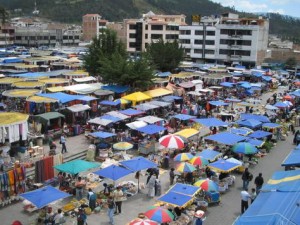
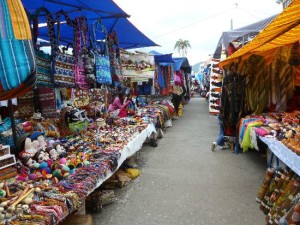
The indigenous Otavaleños are famous for weaving textiles, usually made of wool (that is sometimes as black as a raven), which are sold at the famous Saturday market. Although the largest market is on Saturday, there is a very wide range of wares available throughout the week in the Plaza de los Ponchos, and the many local shops. The shops sell textiles such as handmade blankets, tablecloths, and much more.
 Super Discount offers for everyone. Come, visit our Hotel at a special discounted rate.
